Bernese Oberland Travel Guide – Alps, Lakes, Villages & Highlights

The Bernese Oberland is one of the most impressive and best-known travel regions in Switzerland and forms the southern part of the canton of Bern. This alpine region represents what many travelers imagine when thinking of Switzerland: high mountains, deep valleys, green meadows, traditional villages and spectacular panoramic views. The Bernese Oberland is not only popular within Sntwitzerland but is also one of the most visited mountain regions in Central Europe.

Every year, millions of visitors from Europe, Asia and overseas travel to the Bernese Oberland to experience the Alps at close range. The combination of famous mountain peaks, reliable public transport, scenic railways and well-developed tourist infrastructure makes the region accessible even for travelers without alpine experience. Despite its popularity, large parts of the Bernese Oberland still feel natural and authentic, especially away from the main tourist routes.

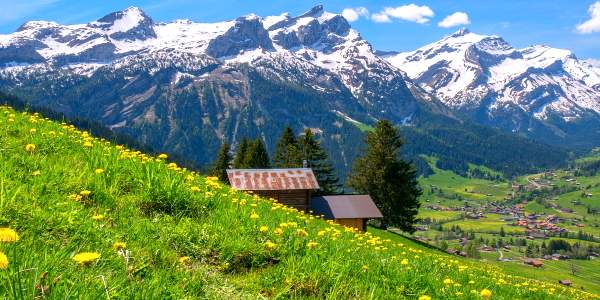
Bernese Oberland landscape with green meadows and mountains

Location and Landscape of the Bernese Oberland

The Bernese Oberland lies south of the Swiss capital Bern and north of the main Alpine ridge. Geographically, the region is dominated by the Bernese Alps, a mountain range that includes some of the most famous peaks in the country. The northern edge of the region is defined by Lake Thun and Lake Brienz, two large alpine lakes that already offer impressive scenery before the high mountains begin.

Between these two lakes lies the town of Interlaken, which is considered the main gateway to the Bernese Oberland. From here, valleys lead deep into the Alps and connect visitors with mountain resorts, cable cars, glaciers and high-altitude viewpoints. Thanks to its location, Interlaken plays a central role in tourism and transport throughout the region.

Famous Mountains and Alpine Icons

The Bernese Oberland is internationally known for its spectacular mountain scenery. Some of the most famous peaks in the Alps are located here, including the Eiger with its legendary north face, the Mönch and the Jungfrau. This mountain trio has shaped the image of the region for more than a century and attracts climbers, photographers and sightseeing tourists alike.

The Jungfrau region is particularly famous for its high-altitude railway to the Jungfraujoch, which is marketed as the highest railway station in Europe. The journey itself is considered a highlight, as the train passes through tunnels inside the mountains and offers views of glaciers and alpine landscapes. For many visitors, this excursion is the main reason for traveling to the Bernese Oberland.

Traditional Villages and Car-Free Resorts

In addition to its mountains, the Bernese Oberland is also known for its traditional alpine villages. Places such as Wengen are famous for their wooden chalets, dramatic mountain settings and car-free atmosphere. Wengen can only be reached by train, which contributes to its calm and relaxed character and makes it especially attractive for visitors looking for a quieter alpine experience.

Near Wengen, the Lauberhorn downhill race takes place every January and is one of the most famous ski races in the World Cup calendar. This event brings international attention to the region and highlights the long tradition of winter sports in the Bernese Oberland.

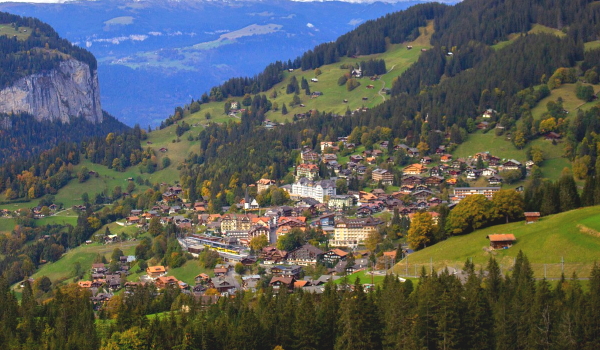
Village near Bern in Switzerland

Many villages in the Bernese Oberland are either completely car-free or only partly accessible by road. Mountain railways, cable cars and rack railways are essential for daily life and tourism and are an important part of the regional identity. These transport systems are not only practical but also offer scenic journeys with impressive views.

Transport and Accessibility

The Bernese Oberland is known for its excellent public transport network. Trains, cable cars and boats connect even remote valleys reliably and make it possible to explore the region without a car. Especially for international visitors, this is a major advantage, as travel is easy, safe and well organized.

Some valleys and mountain passes can be reached by car, while others are accessible only by train or cable car. This mix of transport options allows visitors to plan their stay flexibly and combine different modes of travel depending on their interests and itinerary.

Lakes, Waterfalls and Natural Scenery

Besides high mountains, the Bernese Oberland offers a wide variety of natural landscapes. Lake Thun and Lake Brienz are ideal for boat trips, lakeside walks and short excursions to villages along the shore. Regular passenger boats operate on both lakes and connect many towns and sights.

The region is also famous for its waterfalls, alpine meadows and deep valleys. Numerous hiking trails start directly in villages or at mountain stations, making outdoor activities accessible for both casual walkers and experienced hikers.

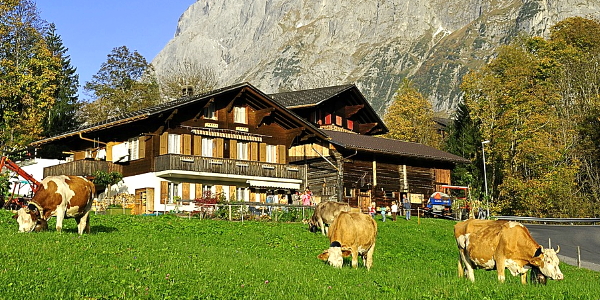
Bernese Alps, cows in front of a farm and landscape with mountains

Interlaken as a Tourist Hub

Interlaken is one of the most famous tourist towns in Switzerland and serves as the main base for exploring the Bernese Oberland. Located between Lake Thun and Lake Brienz, the town is only about two kilometers wide but plays a key role in regional tourism.

Many visitors stay overnight in Interlaken and take day trips to destinations such as Grindelwald, Lauterbrunnen or the Jungfrau region. From here, rail and road connections lead in all directions, making it an ideal starting point for both short stays and longer vacations.

Summer and Winter Tourism

The Bernese Oberland is a year-round destination. In winter, the region is known for skiing, snowboarding and winter hiking, while summer attracts visitors interested in hiking, mountain excursions and sightseeing. A large number of tourists come during the warmer months, including many visitors from Japan, China and South Korea.

Switzerland is generally considered an expensive destination, and the Bernese Oberland is no exception. However, visitors usually find that the quality of infrastructure, scenery and services justifies the higher prices.

Cities and Day Trips

In addition to nature, the Bernese Oberland also offers easy access to historic cities. The Swiss capital Bern is ideal for a day trip and features a well-preserved medieval old town that is listed as a UNESCO World Heritage Site.

Other towns such as Thun on Lake Thun combine urban life with direct access to the lake and surrounding mountains and are well worth a visit.

About This Travel Guide

This online travel guide provides an overview of the Bernese Oberland, including its landscapes, villages, transport options and main attractions. On the right-hand side, you will find an overview of all pages included in this guide, allowing you to explore individual destinations in more detail.

The aim of this guide is to help you plan your trip efficiently and understand why the Bernese Oberland is considered one of the most beautiful and diverse regions in Switzerland. For questions, additions, or error reports, please contact info (ad) switzerland-guide.info