 Posted by
 The Bernese Oberland is one of the easiest alpine regions in Switzerland to explore without a car and without long uphill hikes. The reason is simple: the area has a dense network of cable cars, gondolas, funiculars and mountain railways that connect valleys with panoramic viewpoints, hiking areas and famous peaks. For tourists, this means you can combine short walks with big views, reach mountain restaurants quickly, and plan flexible day trips from places like Interlaken, Grindelwald, Lauterbrunnen, Wengen and Mürren.
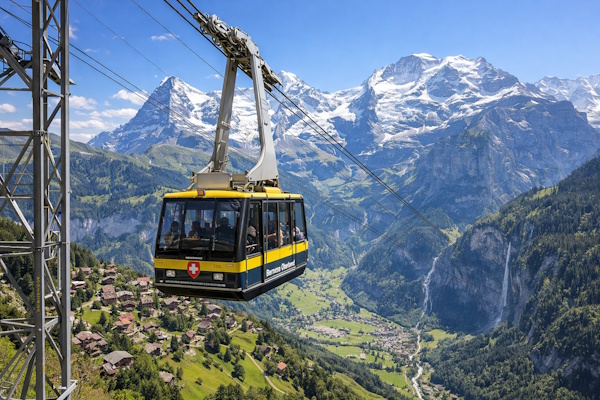
This page is a practical overview of the most important cable cars and mountain transport systems in the Bernese Oberland. It explains where they start, what you can do at the top, which rides are best for views, and how to use them efficiently for hiking, sightseeing and day trips. The focus is on clear planning information, not on marketing hype.
What Counts as “Cable Car” in the Bernese Oberland?
In everyday travel language, “cable car” is often used for different systems. In the Bernese Oberland you will see these main types:
- Gondola lifts (cabins, usually 4–10 people, continuous operation): common in Grindelwald and many ski areas.
- Aerial cableways (large cabins, shuttle back and forth): typical for steep routes and higher altitude.
- Funiculars (railway pulled by cable): often short but steep, like the connection to mountain terraces.
- Cog railways (to high passes and peaks): the Bernese Oberland is famous for them; see the overview page Cog railways in Switzerland.
From a tourist perspective, all of them are part of the same thing: they bring you to a viewpoint, a hiking area or a “must see” attraction without having to climb for hours.
Why Cable Cars Matter for Your Trip Planning
If you stay in the region only a few days, cable cars help you see the highlights with realistic timing. They also help with weather: when clouds cover the highest peaks, you can use a lift to reach a mid-altitude viewpoint, or do valley sightseeing and move up later when the sky opens.
They are also important for families and casual walkers. Many visitors want a short hike with a big payoff. That is exactly what this region offers: a lift ride up, a scenic walk, a mountain restaurant, and a relaxed ride down.
If you are planning a base in the region, Interlaken is the classic choice because it sits between Lake Thun and Lake Brienz, with fast connections into the valleys of Grindelwald and Lauterbrunnen.
Top Cable Cars and Mountain Transport in the Bernese Oberland
Below are the most relevant systems for typical tourists. Some are “pure” cable cars, others are a combination of train + cable car. In the Bernese Oberland, the network works as one big system, so it makes sense to think in “routes” rather than single rides.
Harderbahn (Interlaken to Harder Kulm)
The Harderbahn is a funicular that starts directly in Interlaken and climbs to the viewpoint Harder Kulm. It is one of the fastest ways to get a panoramic view without leaving town. The top station is known for its terrace view over both lakes and the main peaks of the Bernese Alps on clear days.
- Best for: quick viewpoint, short sunset trip, first-day overview of the region
- Time planning: perfect for a 2–3 hour “easy afternoon” program
- Combine with: a walk in Interlaken or a boat trip on Lake Thun / Lake Brienz
Grindelwald – First (gondola route to First Mountain)
First Mountain above Grindelwald is one of the most famous “easy access” mountain areas. The lift takes you up to a high starting point for scenic walks. Many people come for short trails and the general “mountain experience” without demanding hikes.
- Best for: easy panoramic hiking, families, first-time visitors
- At the top: short scenic walks, viewpoints, mountain restaurants
- Good base: Grindelwald
If you want a “hike + cable car” day with low effort and high scenery, First is one of the best choices in the whole region.
Kleine Scheidegg (cog railway hub for many routes)
Kleine Scheidegg is not a cable car station, but it functions like one: it is a high mountain pass reachable by cog railway and serves as a major junction for hiking and sightseeing. From here you are right below the Eiger north face, and trails are available in several directions.
- Best for: classic Alpine scenery, hiking below the Eiger, connections to Jungfraujoch
- Combine with: a ride to Jungfraujoch (Top of Europe)
For many tourists, Kleine Scheidegg is the “gateway station” that makes the high Alps accessible without a long climb.
Jungfraujoch route (train + high mountain lift experience)
The trip to Jungfraujoch is one of the most iconic mountain excursions in Switzerland. It is not a classic cable car ride, but it belongs in this overview because it is the most important “mountain transport experience” in the Bernese Oberland. The trip is expensive, but the scenery is unique if the weather is clear.
If you want a structured overview of ticket options and tours, see Tours to Jungfraujoch.
Tickets and tours to Jungfraujoch (recommended booking)
Capacity is limited and demand is high in peak season. Booking online can save time and stress, especially for day trips from Interlaken.
Lauterbrunnen Valley lifts (access to car-free villages)
Lauterbrunnen is the transport gateway to two famous car-free villages: Wengen and Mürren. Even if you do not ride “big” cable cars, you will probably use mountain transport here because the villages sit on terraces above the valley.
- Best for: scenic villages, easy hikes, waterfalls and valley walks
- Combine with: Staubbach Falls and Trümmelbach Falls
This area is ideal when you want a mix of “easy nature sightseeing” and classic Alpine village atmosphere, without needing a car.
Mürren – Schilthorn (high viewpoint route)
The Schilthorn is one of the best-known viewpoints of the region. The route involves mountain transport (cableways) and brings you to a very high viewpoint with a wide panorama on clear days. The area is famous for its views of the big trio Eiger, Mönch and Jungfrau.
- Best for: dramatic high-alpine panorama without a difficult hike
- Important: the experience depends heavily on weather and visibility
- Good base: Mürren
If you are sensitive to altitude or weather changes, plan Schilthorn for a day with stable forecast and good visibility. If clouds are low, you may see very little at the top.
Schilthorn tickets and mountain excursions
For many visitors, Schilthorn is a “one big viewpoint day”. Online booking can be useful in peak season.
How to Choose the Right Cable Car Day (Simple Decision Guide)
Many visitors feel overwhelmed because there are so many lifts, passes and routes. Here is a practical way to choose without overthinking:
If you want the easiest “big view” day
- Start in Interlaken and ride the Harderbahn.
- Or go to Grindelwald and ride up to First Mountain for short scenic walks.
If you want waterfalls + villages + light hiking
- Base the day in Lauterbrunnen.
- Combine valley sightseeing with Staubbach Falls and Trümmelbach Falls.
- Add a village visit to Mürren or Wengen.
If you want the “Top of Europe” bucket-list experience
- Plan the excursion to Jungfraujoch (best with clear weather).
- Use Kleine Scheidegg as part of the journey and add a short hike if time allows.
If you want a high viewpoint but not Jungfraujoch
- Consider the Schilthorn route from the Mürren area.
Tickets, Passes and Typical Tourist Mistakes
Swiss mountain transport is excellent, but it can be expensive. Many tourists make the same mistakes: they buy tickets too late, plan too many peaks in one day, or assume they can “just decide on the spot” in peak season.
Common mistakes to avoid
- Overplanning peaks: Two mountain excursions in one day often sounds possible, but travel times add up fast.
- Ignoring weather: A cable car ride is not automatically scenic. Visibility is the key factor.
- Not starting early: For popular routes, the first rides are usually calmer and give you more flexibility.
- Skipping the valleys: The Bernese Oberland is not only about summits. The valley scenery around Lauterbrunnen is one of the highlights of the whole Alps.
Do you need a pass?
Whether a pass makes sense depends on your travel style. If you plan multiple mountain rides within a short period, passes can be cost-efficient. If you do only one big excursion (for example Jungfraujoch), a pass may not help much. The best method is to list your planned rides first, then compare options.
For price-oriented planning, also check the general overview page Switzerland prices to estimate daily travel costs in Switzerland.
Best Cable Car Combinations for 1-Day Itineraries
Here are realistic day plans that work well for typical tourists. They are designed for normal travel speed (not “run from place to place”).
Itinerary 1: Interlaken + Harder Kulm + Lake
- Morning: explore Interlaken on foot
- Midday: ride Harderbahn to the viewpoint
- Afternoon: boat time on Lake Thun or Lake Brienz
Itinerary 2: Grindelwald + First (easy hiking day)
- Base: Grindelwald
- Ride: gondola to First Mountain
- Do: short panoramic walk + relaxed lunch
Itinerary 3: Lauterbrunnen + waterfalls + car-free village
- Base: Lauterbrunnen
- Walk: to Staubbach Falls
- Visit: Trümmelbach Falls
- Add: village time in Mürren or Wengen
Itinerary 4: Schilthorn viewpoint day
- Base: Mürren area (Mürren)
- Ride: up to Schilthorn
- Optional: short hikes at mid-stations if weather changes
Itinerary 5: Jungfraujoch (full-day flagship excursion)
- Start early from Interlaken or Grindelwald
- Route via Kleine Scheidegg
- Main goal: Jungfraujoch
- Backup plan: if clouds are heavy, switch to a lower viewpoint day instead
Safety and Practical Tips (Especially for First-Time Visitors)
Cable cars are safe and well-managed in Switzerland, but tourists should still plan carefully. Mountains are unpredictable, even in summer.
- Check the forecast: visibility matters more than temperature. A sunny valley can still mean clouds at the top.
- Dress in layers: it can be much colder at the top station than in the valley.
- Start early: you get more time options and fewer crowds.
- Bring water and snacks: mountain restaurants are great, but expensive and sometimes busy.
- Don’t gamble with thunderstorms: if storms are likely in the afternoon, do mountain rides in the morning.
For travelers arriving by plane, also check Airports near the Bernese Oberland to plan your transfer into the mountains.
Short FAQ: Cable Cars in the Bernese Oberland
Are cable cars running all year?
Some routes operate year-round, but many systems have seasonal schedules and maintenance closures. In winter, some lifts focus on ski operations. In shoulder seasons, some routes may close for several weeks.
Is Jungfraujoch a cable car?
No. Jungfraujoch is reached mainly by mountain railway (cog railway and tunnel train), but for tourists it plays the same role: it is a major high-alpine transport experience.
Which cable car is best for families?
First above Grindelwald and the easy access around the Harderbahn viewpoint are usually the simplest options.
Which area is best if the weather is unstable?
The Lauterbrunnen valley and the lake areas (Lake Thun, Lake Brienz) are often a better choice than very high summit rides.
Conclusion
Cable cars and mountain transport are a key reason why the Bernese Oberland is so popular with tourists. You can reach viewpoints and hiking areas quickly, adjust plans when weather changes, and combine classic Alpine villages with waterfalls, lakes and high peaks. If you plan your days realistically and keep visibility in mind, the region’s lifts and railways make it easy to build unforgettable itineraries.
For more inspiration on where to go next, also see Where to go in Switzerland and the general overview Sights in Switzerland.