 Posted by
 Lake Thun (German: Thunersee) is a large Alpine lake located in the south of the Swiss canton of Bern, directly in the Bernese Oberland.
Together with nearby Lake Brienz, it forms the aquatic heart of one of Switzerland’s most popular travel regions.
The lake lies between the towns of Thun in the west and Interlaken in the east.
Surrounded by high mountains, historic towns and small villages, Lake Thun offers a combination of scenery, outdoor activities and cultural sights that makes it attractive throughout the year.
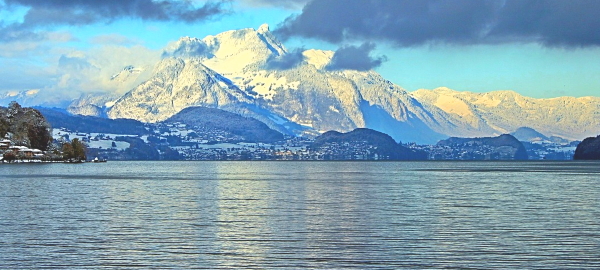
Location and Landscape
Lake Thun is beautifully situated in a wide Alpine valley. From the shoreline, you can see the high peaks of the Bernese Alps, including famous mountains such as the Eiger and the Mönch. In clear weather, the contrast between the deep blue lake and the snow-covered peaks is especially impressive.
The elongated lake stretches more than 17 kilometers from west to east and is around 3.5 kilometers wide. With a surface area of nearly 48 square kilometers and a maximum depth of over 200 meters, Lake Thun is one of the largest lakes entirely located within a single Swiss canton. Its water surface lies at an altitude of about 558 meters above sea level.
Walking, Cycling and Driving Around Lake Thun
A complete footpath around Lake Thun is more than 50 kilometers long. While only a few travelers walk the entire loop, many enjoy shorter sections along the shore. These paths often pass through small villages, parks and lakeside promenades.
For travelers by car, two main roads run along the lake. The faster highway follows the southern shore, while the northern lakeside road is much more scenic. If you are driving between Thun and Interlaken, the northern route is highly recommended.
Here, you often drive directly along the water and pass through charming villages with historic centers.
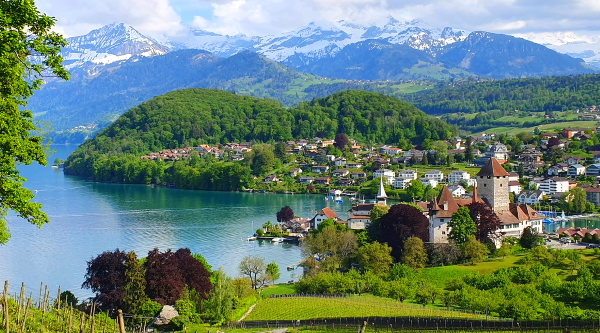
The railway line between Thun and Interlaken runs along the southern side of the lake,
with an important stop in Spiez. Train travelers still enjoy good views, but the road on the north shore is considered more picturesque.
Lake Thun and Water Sports
Lake Thun is well known for water sports. Thanks to its size and wind conditions, the lake is popular for sailing and windsurfing. In summer, swimming areas and small beaches attract both locals and tourists.
Kayaking and stand-up paddling are also common, especially near calmer shoreline sections. Due to the lake’s depth and temperature, swimmers should be aware that the water can remain relatively cool even in summer.
Boat Trips on Lake Thun
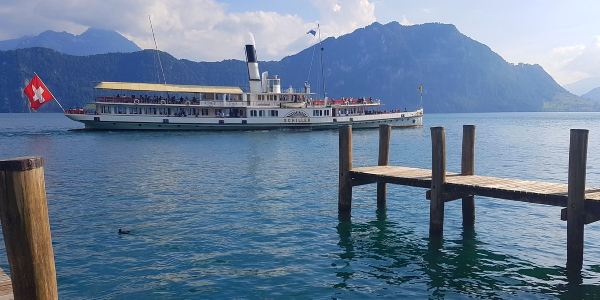
One of the best ways to explore Lake Thun is by boat. Regular passenger ferries connect the main towns and villages along the shore, including Thun, Spiez and Interlaken. Most departure points are located close to the town centers and railway stations.
Many visitors use the boats not only as a sightseeing experience but also as practical transport to visit several places around the lake during one day.
Day pass for unlimited boat trips on Lake Thun and Lake Brienz:
A popular option is the combined day ticket, which allows unlimited ferry use on both lakes for one day. This ticket is best booked online in advance.
More info and booking
Connection to Lake Brienz and the Aare River
Lake Thun is directly connected to its neighboring lake, Lake Brienz. The connection is formed by the wide Aare River, which flows from Lake Brienz through
Interlaken and into Lake Thun.
The distance between the two lakes is only about 2 kilometers. Interlaken lies exactly between them and serves as the largest tourist base in the region. Many travelers stay in Interlaken and visit both lakes during their vacation.
Town of Thun
Thun is the largest city on Lake Thun and the main urban center of the Bernese Oberland.
With around 40,000 inhabitants, it is the 11th largest city in Switzerland. Thun is located at the western end of the lake, roughly halfway between Interlaken and the city of Bern.
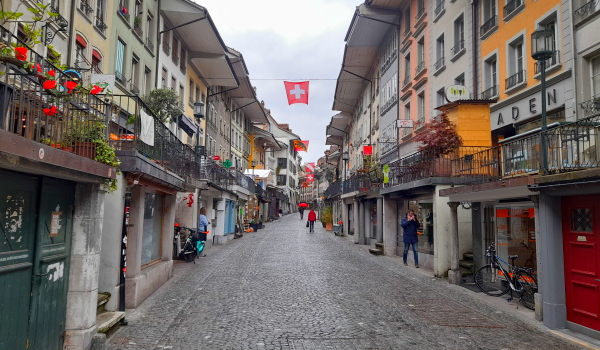
One of the highlights of Thun is the historic city center along the Aare River. The river splits into two arms here, with the pedestrian zone of Bälliz located in between. Old wooden bridges cross the river and can still be used by pedestrians today.
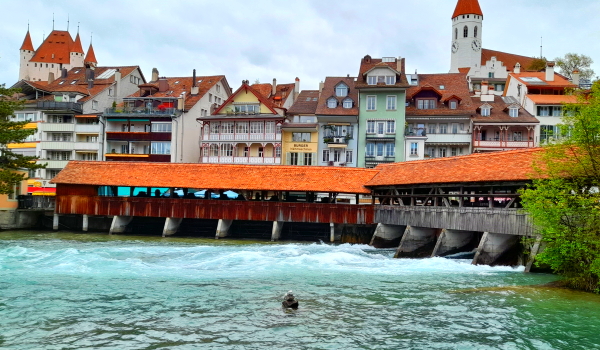
East of the river arms lies the Obere Hauptgasse, another important street with shops, cafés and historic buildings.
Thun has a relaxed atmosphere, especially in summer, when street cafés and restaurants fill the city center.
Excursions and Day Trips from Lake Thun
Lake Thun is an excellent base for excursions into the surrounding mountains.
From the lake towns, you can easily reach destinations such as Interlaken, Lauterbrunnen, Wengen orMurren.
Many visitors combine a stay at Lake Thun with trips to the Jungfrau region or the Schilthorn.
Tickets to the Jungfraujoch (Top of Europe):
Due to limited train capacity and very high demand, booking in advance is strongly recommended.
More info and booking
Is Lake Thun Worth Visiting?
Lake Thun combines scenic beauty, historic towns, outdoor activities and excellent transport connections.
Whether you enjoy relaxed boat trips, hiking, cycling or cultural sightseeing,
the lake offers something for almost every type of traveler.
Thanks to its central location in the Bernese Oberland, Lake Thun is also an ideal base
for exploring one of Switzerland’s most famous mountain regions.