 Posted by
 The Bernina Express is one of the most spectacular scenic train routes in the world. Traveling between Switzerland and Italy, it crosses alpine landscapes, mountain passes, viaducts and glaciers — all without needing to change trains. For many visitors, this journey is a highlight of a Swiss Alps itinerary.
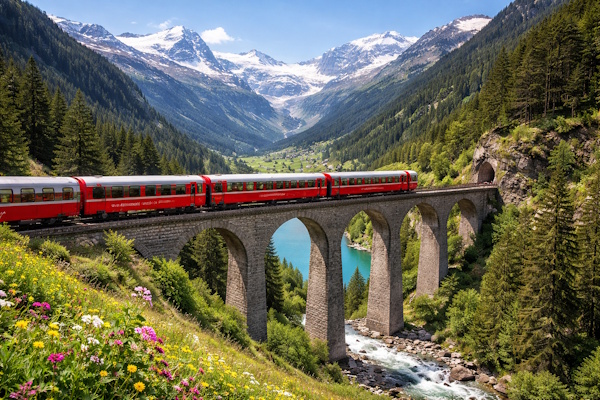
This in-depth travel guide explains how the Bernina Express works, how to book tickets, tips for the best experience, itinerary ideas, arrival options, practical travel advice, what to expect, ideal travel seasons and whether this iconic train ride is worth adding to your Switzerland trip.
What is the Bernina Express?
The Bernina Express is a panoramic train service operated by the Swiss Rhaetian Railway (RhB). It connects the Swiss town of Chur (or sometimes Davos) with Tirano in northern Italy, crossing the UNESCO-listed Bernina Railway line. The train route is famous for its stunning Alpine views and dramatic landscapes.
Unlike normal trains, the Bernina Express has specially designed panoramic windows to give every passenger an unobstructed view of glaciers, peaks, alpine lakes and impressive viaducts along the way.
Route & Key Highlights
The full Bernina Express route typically runs between Chur and Tirano (Italy). Most travelers choose the most scenic portion from St. Moritz to Tirano, which offers the most dramatic scenery. The route crosses the Bernina Pass at over 2,253 meters above sea level.
- Landwasser Viaduct: A UNESCO World Heritage landmark with spectacular stone arches.
- Alp Grüm: Mountain station with panoramic views of the Palü Glacier.
- Bernina Pass: High alpine crossing with sweeping glacier panoramas.
- Lago Bianco: A beautiful alpine lake beside the track.
- Tirano: End of the line in Italy — perfect for lunch or exploring before returning.
Location & How to Access the Bernina Express
The Bernina Express passes through eastern Switzerland and northern Italy. Main Swiss access points include:
- Chur: Start of the classic full journey.
- Davos: Alternative Swiss departure.
- St. Moritz: Most scenic segment starts here.
Travel to Chur or St. Moritz is easy by Swiss rail from major cities such as Zurich, Lucerne or Bern. If your itinerary includes other Swiss highlights, consider also visiting Interlaken or joining mountain excursions from Geneva.
History of the Bernina Railway
The Bernina Railway was completed in the early 20th century as part of the RhB network in eastern Switzerland. It overcame major engineering challenges, including steep gradients and high alpine snow. The full line was integrated into the UNESCO World Heritage list as part of the “Rhaetian Railway in the Albula / Bernina Landscapes.”
Today, this historic rail corridor is not only functional but also a celebrated tourist attraction. The line’s combination of tunnels, bridges and valleys showcase the ingenuity of historic rail engineering.
How to Book & Ticket Information
Tickets for the Bernina Express can be booked through the official Rhaetian Railway website or on GetYourGuide, which often offers flexible options, reserved seating and convenient add-ons like guided commentary and hotel pickup.
Bernina Express Scenic Train Tickets
Reserve your panoramic seat on the Bernina Express with flexible departure options, panoramic windows and audio commentary on the route.
Booking Tips:
- Reserve seats early, especially in summer and during European holidays.
- Choose a window seat on the right side (direction Chur to Tirano) for the best glacier views.
- Consider round-trip or hop-on hop-off options for flexibility.
What to Expect on the Bernina Express
The Bernina Express journey is all about panoramic views. The train’s large windows let you see landscapes that change dramatically over the course of the ride — rocky mountain faces, crystal alpine lakes, deep valleys and high passes.
You’ll also pass through numerous tunnels, shaded switchbacks and elevated viaducts. On clear days, the views of the Palü Glacier and the Bernina massif peaks are breathtaking.
Best Time to Travel
The scenery and conditions differ by season:
- Summer (June–September): Green valleys, clear views and mild temperatures.
- Autumn (Sep–Oct): Golden foliage and quieter routes.
- Winter (Dec–March): Snow-covered landscapes with dramatic contrasts.
- Spring (Apr–May): Snow melting in the valleys and colorful blossoms.
Summer and autumn are generally considered the best seasons for panoramic train journeys because of the stable weather and longer daylight hours.
Itinerary Ideas with the Bernina Express
The Bernina Express can be incorporated into broader Switzerland itineraries. Here are a few ideas:
Classic Route
Chur → St. Moritz → Bernina Pass → Tirano → Return. Ideal if you want a full-day experience with both Swiss and Italian scenery.
Lakes & Mountains Loop
Ride the Bernina Express to Tirano, explore the town, then continue to Lake Como in Italy for a scenic lakeside stay.
Swiss Highlights Combo
Combine the Bernina Express with stays in Lucerne, Interlaken or Geneva and add mountain excursions such as Jungfraujoch or Schilthorn.
Practical Tips for the Bernina Express
- Arrive at the station early to find your reserved seat and store luggage.
- Pack snacks and water — some trains may not have onboard catering.
- Bring a good camera — the views change constantly.
- Download offline maps and route guides if you plan stops along the way.
Pros & Cons of Riding the Bernina Express
Pros
- Iconic scenic train journey
- Panoramic windows for unbeatable views
- No need to change trains for major segments
- Crosses the Alps in dramatic fashion
Cons
- Seats must be reserved well in advance
- Expensive during peak season
- Weather can affect visibility
Is the Bernina Express Worth It?
For many travelers, the Bernina Express is a once-in-a-lifetime train experience. It combines engineering marvels with some of the most breathtaking scenery in Europe. Whether you are a photography enthusiast, nature lover, or simply want a memorable way to cross the Alps, the Bernina Express is widely considered worthy of inclusion in any Switzerland travel plan.
FAQ – Bernina Express
What is the Bernina Express?
The Bernina Express is a scenic panoramic train operated by the Rhaetian Railway (RhB). It travels through spectacular Alpine landscapes between Switzerland and northern Italy, often between Chur or St. Moritz and Tirano.
How long does the Bernina Express journey take?
The full route from Chur to Tirano takes about 4–4.5 hours. Many travelers choose the scenic segment from St. Moritz to Tirano, which typically takes around 2.5–3 hours one way.
Do I need to reserve a seat on the Bernina Express?
Yes. Reservations are mandatory on the Bernina Express because seats with panoramic windows are limited. Reserve well in advance, especially during peak season.
Which side of the train is best for the views?
When traveling from Chur or St. Moritz to Tirano, many people recommend the right-hand side for dramatic glacier and high-mountain views. However, both sides offer excellent panoramas at different points along the route.
Is food available on board?
Some Bernina Express services offer basic snacks and beverages onboard, but options are limited. It’s a good idea to bring your own refreshments, especially for longer journeys.
Can I take the Bernina Express in winter?
Yes. The Bernina Express runs year-round, and winter journeys offer beautiful snow-covered landscapes. However, visibility can be affected by weather conditions, so check forecasts before booking.
Is the Bernina Express wheelchair accessible?
Yes, the Bernina Express trains are generally wheelchair accessible, but assistance and space for wheelchair users may vary. Contact the operator or your booking provider in advance to ensure any needs are accommodated.
Is luggage storage available on the Bernina Express?
Yes. There is space for luggage on the train, usually in designated racks or storage areas near seating. For larger suitcases, arrive early to secure space.
Can I break up the trip and stop in towns along the way?
Yes. You can plan intermediate stops at stations such as St. Moritz, Alp Grüm or Poschiavo. Just check train schedules and reservation rules if you plan to reboard the same service.
Is the Bernina Express suitable for families with children?
Yes. The panoramic windows, scenic views and comfortable seating make it enjoyable for families. Just ensure you book seats together and bring snacks for longer segments of the journey.
Does the Bernina Express require a Swiss Travel Pass?
A Swiss Travel Pass covers the base fare and regional rail travel, but a reservation fee or supplement may still be required for the Bernina Express. Check current pass conditions when booking.
Is the Bernina Express worth it?
Many travelers consider the Bernina Express one of the world’s most scenic train journeys. The combination of mountains, valleys, viaducts and glaciers across a UNESCO-listed rail line makes it a memorable highlight of a Switzerland itinerary.