 Posted by
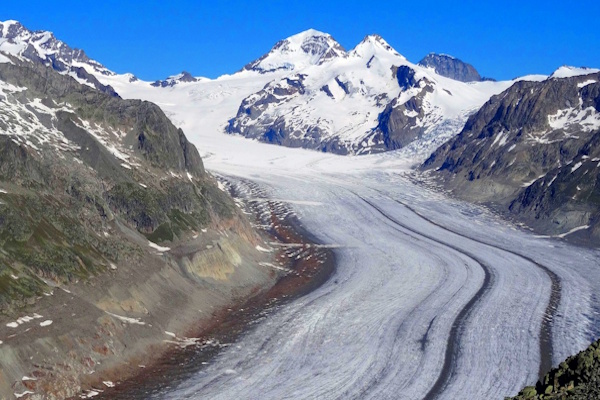
 The Aletsch Glacier is the largest glacier in the Alps and one of the most impressive natural landscapes in Switzerland. Stretching for around 20 kilometers, this massive river of ice forms the heart of the UNESCO Swiss Alps Jungfrau-Aletsch region. If you are planning a trip to Switzerland and want to experience high alpine scenery, panoramic viewpoints and dramatic glacial landscapes, the Aletsch Glacier should be on your shortlist.
🎟 Switzerland Tours & Mountain Excursions
Compare guided glacier hikes, panoramic viewpoints and alpine day trips across Switzerland.
🏨 Hotels Near the Aletsch Glacier
Find accommodation in the Aletsch Arena, Fiesch, Bettmeralp and surrounding mountain villages.
AI-generated image
Where Is the Aletsch Glacier?
The Aletsch Glacier is located in southern Switzerland in the canton of Valais. It lies between the Bernese Oberland and the upper Rhône Valley. The glacier forms part of the protected UNESCO region that also includes famous peaks such as Eiger, Mönch and Jungfrau.
Unlike destinations such as Jungfraujoch, which sits directly above the glacier system, the Aletsch Glacier itself is best viewed from panoramic viewpoints in the Aletsch Arena: Bettmerhorn, Eggishorn and Moosfluh.
How to Get to the Aletsch Glacier
By Train
The easiest access point is via Brig or Fiesch in Valais. From Brig, regional trains connect to Fiesch. From there, cable cars take visitors up to Fiescheralp and Eggishorn.
If you are traveling from the Bernese Oberland region near Interlaken, you can reach Brig via scenic rail routes through the Alps.
By Car
You can drive to Fiesch or Betten Valley Station. From there, you must continue by cable car, as most villages in the Aletsch Arena are car-free.
Swiss Travel Pass
The Swiss Travel Pass covers most train routes to Brig and Fiesch. Cable cars usually offer discounts but are not fully included.
History and Geological Background
The Aletsch Glacier formed during the last Ice Age. Over thousands of years, massive ice sheets carved deep valleys and shaped the alpine landscape. At its thickest point, the glacier reaches more than 800 meters in depth.
Like most glaciers worldwide, the Aletsch Glacier has been retreating due to climate change. Historical markers along hiking trails show how far the glacier extended in previous centuries. This makes a visit both visually impressive and scientifically significant.
Main Viewpoints of the Aletsch Glacier
Eggishorn (2,869 m)
Eggishorn offers the widest panoramic view of the entire glacier. From the summit platform, you can see the glacier’s full length and surrounding 4,000-meter peaks. It is the most comprehensive viewpoint and highly recommended.
Bettmerhorn
This viewpoint provides a closer look at the glacier’s upper section. It is less crowded than Eggishorn and connected to Bettmeralp by cable car.
Moosfluh
Moosfluh is known for accessible hiking trails along the glacier’s edge. It is suitable for visitors who want scenic walks without extreme altitude.
Hiking Around the Aletsch Glacier
The Aletsch Arena offers well-marked hiking routes with varying difficulty levels.
- Panorama Trail Bettmerhorn to Riederalp
- Eggishorn Summit Walk
- Glacier View Trail Moosfluh
- Guided glacier trekking (with certified mountain guides)
If you enjoy alpine hiking, you may also consider exploring trails in the Bernese Oberland, though the Aletsch region offers a distinct high-alpine glacier experience.
Best Time to Visit the Aletsch Glacier
Summer (June–September)
Best for hiking, panoramic visibility and stable weather. Snow is mostly cleared from trails.
Autumn (October)
Clear air and fewer visitors. Some cable cars may close depending on weather.
Winter (December–March)
Part of the region becomes a ski area. Glacier views are still accessible, but hiking options are limited.
How Long Should You Stay?
- Half day: One cable car ascent and panoramic viewpoint.
- Full day: Combine two viewpoints and a scenic hike.
- 2 days: Include hiking, glacier viewpoints and overnight stay in Bettmeralp or Riederalp.
If you are combining the Aletsch Glacier with other highlights like Zermatt or Mount Titlis, plan at least 3–4 days in the region.
Combining Aletsch Glacier with Other Attractions
- Brig Old Town
- Zermatt and the Matterhorn
- Bernina Express scenic train (Bernina Express)
- Lake Thun and Lake Brienz in the Bernese Oberland
Pros & Cons of Visiting the Aletsch Glacier
Pros
- Largest glacier in the Alps
- UNESCO World Heritage status
- Panoramic high-altitude viewpoints
- Well-maintained infrastructure
- Car-free alpine villages
Cons
- Cable car costs can be high
- Weather dependent visibility
- Limited public transport late in the evening
Is the Aletsch Glacier Worth Visiting?
Yes. If you are interested in alpine landscapes, glaciers and panoramic mountain views, the Aletsch Glacier is one of the most impressive natural attractions in Switzerland. It offers a more authentic and less commercial atmosphere compared to highly developed summit destinations.
For travelers looking for dramatic scenery without extreme crowds, the Aletsch Arena is a strong alternative to other high-profile mountain excursions.
FAQ – Aletsch Glacier
What is the Aletsch Glacier?
The Aletsch Glacier is the largest glacier in the Alps and one of the most important natural landmarks in Switzerland. It stretches for about 20 kilometers and forms part of the UNESCO Swiss Alps Jungfrau-Aletsch World Heritage Site. The glacier originates from large snowfields around Jungfrau, Mönch and Eiger and slowly flows southward into the Rhône Valley.
How long is the Aletsch Glacier?
The glacier is approximately 20 kilometers long. It is not only long but also very thick. In some areas, the ice depth reaches several hundred meters. Its size makes it the most extensive glacier system in the entire Alpine region.
Where exactly is the Aletsch Glacier located?
The Aletsch Glacier lies in the canton of Valais in southern Switzerland. It is situated between the Bernese Oberland and the upper Rhône Valley. The main access villages are Fiesch, Bettmeralp and Riederalp, which form the Aletsch Arena.
Is the Aletsch Glacier part of the Jungfrau region?
Yes. The glacier belongs to the Jungfrau-Aletsch UNESCO region. While many visitors see the glacier from Jungfraujoch, the best panoramic views of its full length are actually from Eggishorn and Bettmerhorn in Valais.
Why is the Aletsch Glacier famous?
It is famous because of its size, its UNESCO status and its dramatic alpine setting. It represents one of the best examples of glacial landscape formation in Europe and is scientifically important for climate research.
How do you reach the Aletsch Glacier?
You usually travel by train to Brig or Fiesch. From there, cable cars take you to Fiescheralp, Bettmeralp or Riederalp. These mountain villages are car-free and serve as starting points for viewpoints and hikes.
Is the Aletsch Glacier accessible by car?
You can drive to valley stations such as Fiesch or Betten. However, the mountain villages themselves are car-free. Visitors must continue by cable car.
Is the Swiss Travel Pass valid for visiting the Aletsch Glacier?
The Swiss Travel Pass covers train travel to Brig and Fiesch. Cable cars to the viewpoints are not fully included but often offer discounted fares for pass holders.
What are the best viewpoints of the Aletsch Glacier?
- Eggishorn – panoramic view of the entire glacier
- Bettmerhorn – closer perspective on the upper glacier
- Moosfluh – accessible hiking trails with glacier views
Which viewpoint is the best?
Eggishorn is generally considered the most impressive because it provides a full-length view of the glacier and surrounding 4,000-meter peaks.
Can you walk directly on the glacier?
Yes, but only with a certified mountain guide. Glacier trekking requires special equipment such as crampons and ropes. Independent glacier walking is dangerous due to crevasses and unstable ice.
Is glacier hiking suitable for beginners?
Guided glacier tours are designed for beginners with basic fitness. No technical climbing experience is required, but participants should be comfortable walking on uneven terrain.
How long should you plan for a visit?
For a simple panoramic visit to Eggishorn, half a day is enough. If you want to hike between viewpoints or stay overnight in the Aletsch Arena, plan one to two days.
When is the best time to visit the Aletsch Glacier?
The best months are June to September. During this period, hiking trails are usually clear of snow and weather conditions are more stable. Autumn offers fewer crowds but limited cable car schedules.
Can you visit in winter?
Yes. The Aletsch Arena becomes a ski area in winter. Glacier views remain accessible via cable cars, but hiking options are reduced.
Is the glacier melting?
Yes. Like many glaciers worldwide, the Aletsch Glacier has been retreating over the past decades due to rising temperatures. Historical markers along hiking trails show previous glacier boundaries.
Is the Aletsch Glacier suitable for children?
Yes, especially panoramic viewpoints reached by cable car. Families should choose easy hiking routes and ensure proper clothing for changing mountain weather.
How high are the viewpoints?
Eggishorn stands at approximately 2,869 meters above sea level. Bettmerhorn is slightly lower but still offers high alpine scenery.
Is altitude sickness a concern?
Most visitors do not experience altitude sickness because the viewpoints are below 3,000 meters. However, people sensitive to altitude should ascend slowly and stay hydrated.
What should you wear when visiting?
Wear layered clothing, sturdy hiking shoes and sun protection. Even in summer, temperatures at nearly 3,000 meters can be cool and windy.
Are there restaurants near the viewpoints?
Yes. Mountain restaurants are available at Eggishorn, Bettmerhorn and in villages like Bettmeralp. Opening hours vary seasonally.
Can you combine the Aletsch Glacier with other destinations?
Yes. Many visitors combine the glacier with Zermatt, the Bernina Express or trips to the Bernese Oberland region.
Is the Aletsch Glacier crowded?
Compared to destinations like Jungfraujoch, the Aletsch Glacier viewpoints are generally less crowded. Peak season (July–August) can still be busy on clear days.
Are there accommodation options in the Aletsch Arena?
Yes. Bettmeralp, Riederalp and Fiescheralp offer hotels, apartments and mountain lodges. These villages provide direct access to hiking trails and viewpoints.
Is it worth visiting the Aletsch Glacier instead of Jungfraujoch?
If you prefer wide panoramic glacier views and fewer crowds, Aletsch is an excellent choice. Jungfraujoch offers high-altitude infrastructure and snow experiences, while Aletsch provides a more natural and expansive glacier panorama.
What makes the Aletsch Glacier unique?
Its size, UNESCO status, geological importance and scenic viewpoints make it unique within the Alps. It represents one of the most impressive examples of glacial landscapes in Europe.
Do you need to book cable cars in advance?
Advance booking is generally not required, but during peak summer weekends, purchasing tickets early in the day is recommended.
Is photography good at the Aletsch Glacier?
Yes. Clear days offer wide panoramic shots with dramatic ice formations and surrounding peaks. Early morning light often provides the best contrast.
Is the Aletsch Glacier worth visiting?
Yes. For visitors interested in alpine scenery, glaciers and UNESCO natural heritage, the Aletsch Glacier is one of the most impressive and educational destinations in Switzerland.