 Posted by
 Marmots are among the most charming and recognizable wild animals in Switzerland. Known for their loud whistling calls and upright posture on alpine meadows, these social rodents are a highlight for hikers exploring the Swiss Alps. For many visitors, spotting a marmot in the wild is just as exciting as seeing ibex or chamois.
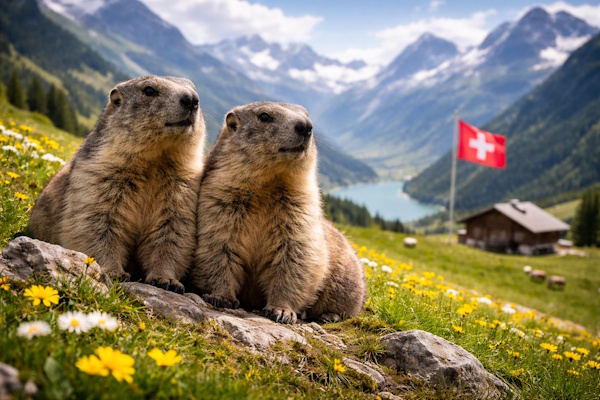
This complete guide explains where to see marmots in Switzerland, the best time for sightings, how to identify them, what they eat, whether they are dangerous, and how to observe them responsibly. If you are hiking in regions such as the Bernese Oberland fauna areas, around Grindelwald, Zermatt or near Oeschinen Lake, you have good chances of seeing them.
Alpine Wildlife Tours in Switzerland
Join guided alpine hikes where experienced local guides help you spot marmots and other mountain wildlife safely and responsibly.
Find Hotels Near Alpine Hiking Areas
Stay close to high-altitude hiking trails for the best chances of seeing marmots early in the morning.
What Is a Marmot?
The Alpine marmot (Marmota marmota) is a large ground squirrel native to the European Alps. It belongs to the rodent family and is well adapted to life in high alpine environments.
- Scientific name: Marmota marmota
- Length: 40–60 cm (plus tail)
- Weight: 3–8 kg (before hibernation)
- Habitat: Alpine meadows and rocky slopes
- Altitude: Usually 1,500–3,000 meters
Marmots are known for their loud whistling alarm calls, which warn other members of the colony about potential danger.
Where to See Marmots in Switzerland
Marmots live above the tree line in open alpine landscapes. They prefer sunny slopes with soft soil suitable for burrowing.
Best Regions for Marmot Sightings
- Bernese Oberland hiking trails
- Above Interlaken
- Near Lauterbrunnen Valley
- Grindelwald First area (see First Mountain)
- High alpine trails around Jungfraujoch
- Valais region near Zermatt
In general, any alpine hiking route above 1,800 meters offers potential sightings.
Best Time to See Marmots
Season
- Late May to September
Marmots hibernate from roughly October to April. During winter, they remain underground and are not visible.
Time of Day
- Early morning
- Late afternoon
During hot midday hours, marmots may retreat into their burrows.
How to Spot a Marmot
- Look for burrow entrances in alpine meadows
- Listen for high-pitched whistling sounds
- Scan sunny slopes with binoculars
- Watch for movement near rocks
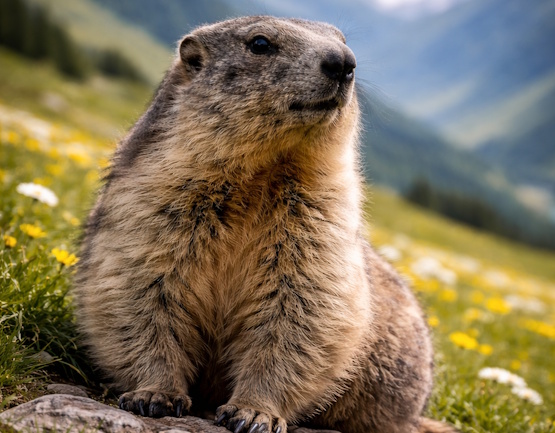
Marmots often sit upright on their hind legs to observe their surroundings.
Are Marmots Dangerous?
No. Marmots are not dangerous and usually avoid humans. They may approach hikers if accustomed to people, but feeding wildlife is strongly discouraged.
Compared to topics discussed in dangerous animals in Switzerland, marmots pose no real threat.
What Do Marmots Eat?
- Alpine grasses
- Herbs
- Flowers
- Roots
During summer, marmots eat intensively to build fat reserves for their long winter hibernation.
Marmot Hibernation
Marmots hibernate for up to seven months. They live in underground burrow systems and survive winter by lowering their body temperature and heart rate significantly.
This adaptation allows them to endure harsh alpine winters.
Marmots and Alpine Ecosystems
Marmots play an important role in alpine ecosystems:
- Soil aeration through burrowing
- Seed dispersal
- Prey species for eagles and foxes
You can learn more about alpine biodiversity in Bernese Oberland flora and related nature guides.
Photography Tips
- Use a telephoto lens
- Stay quiet and patient
- Avoid sudden movements
- Shoot at eye level for better composition
Early morning light creates soft and natural images.
Marmots vs Other Alpine Animals
Marmots are sometimes confused with ground squirrels or young beavers. However:
- Marmots live in alpine areas
- They have a thick brown-grey fur
- They stand upright frequently
Unlike Swiss ibex, they are much smaller and live in colonies.
Pros & Cons of Marmot Watching
Pros
- Free wildlife experience
- Family-friendly activity
- Common in alpine regions
- Unique alpine soundscape
Cons
- Requires hiking at higher elevation
- Seasonal visibility only
- Sightings not guaranteed
How to Combine Marmot Watching with Hiking
Marmot spotting works best as part of a hiking day. Consider combining it with:
- Panorama hikes in the Bernese Oberland
- Lake visits such as Oeschinen Lake
- Mountain cable car routes
See Hiking in the Bernese Oberland for route ideas.
Is It Worth Looking for Marmots?
Yes. Marmots are among the easiest wild mammals to observe in Switzerland during summer. Their playful behavior and distinctive whistles make alpine hikes more memorable.
FAQ – Marmots in Switzerland
What kind of marmots live in Switzerland?
The species found in Switzerland is the Alpine marmot (Marmota marmota). It is native to the European Alps and well adapted to high mountain environments.
Where can I see marmots in Switzerland?
Marmots live above the tree line, typically between 1,500 and 3,000 meters. Popular regions include the Bernese Oberland, Valais (around Zermatt), Graubünden and high alpine areas near Grindelwald and Interlaken.
When is the best time to see marmots?
The best time is from late May to September. Marmots hibernate from roughly October to April and are not visible during winter.
What time of day are marmots most active?
Marmots are most active in the early morning and late afternoon. During hot midday hours, they often retreat into their burrows.
Are marmots dangerous to humans?
No. Marmots are not dangerous and usually avoid people. They may appear curious but should never be fed or approached closely.
Why do marmots whistle?
Marmots produce a high-pitched whistling sound as an alarm call. It warns other members of the colony about potential predators or disturbances.
How big are Alpine marmots?
They typically measure 40–60 cm in body length and can weigh between 3 and 8 kilograms before hibernation, when they have accumulated fat reserves.
Do marmots live alone?
No. Marmots live in colonies, usually consisting of a dominant breeding pair and their offspring. They share complex underground burrow systems.
What do marmots eat?
Marmots feed on alpine grasses, herbs, flowers and roots. During summer they eat intensively to prepare for winter hibernation.
How long do marmots hibernate?
Marmots can hibernate for up to seven months. During this time, their body temperature and heart rate drop significantly to conserve energy.
What predators do marmots have?
Natural predators include golden eagles, foxes and occasionally wolves. Young marmots are more vulnerable than adults.
Can children easily see marmots while hiking?
Yes, especially on popular alpine hiking trails in summer. Marmots are among the most visible wild mammals in the Swiss Alps.
Are marmots protected in Switzerland?
Yes. Marmots are protected and part of regulated wildlife management. Hunting is controlled and limited in certain areas.
Do marmots damage hiking trails?
Their burrows can create holes in alpine meadows, but they are a natural and important part of the mountain ecosystem.
What is the difference between a marmot and a ground squirrel?
Marmots are larger, live in alpine regions and have thicker fur. Ground squirrels are usually smaller and inhabit lower elevations.
Is it guaranteed to see marmots in Switzerland?
No wildlife sighting can be guaranteed. However, marmots are relatively common in high alpine areas during summer, making them easier to observe than many other wild animals.