 Posted by
 Switzerland is known for high living standards — and that includes grocery shopping. Supermarkets here offer excellent quality, fresh products and a wide selection of local and international foods. However, prices in Swiss supermarkets are generally higher than in many other European countries. This guide explains the major supermarket chains, typical price ranges, shopping tips for travelers and how to save money while shopping in Switzerland.
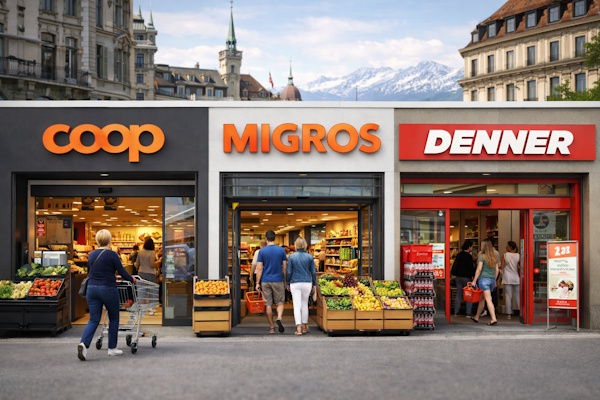
Whether you’re planning a self-catering trip in the Swiss Alps or a city stay in places like Zurich, Lausanne or Geneva, this guide will help you understand the grocery scene and prices in Switzerland.
Major Supermarket Chains in Switzerland
Coop
Coop is one of the two largest grocery chains in Switzerland. It offers a broad range of products, from everyday groceries to organic items, household goods and wine. Many Coop stores have in-house bakeries and a good selection of vegetarian and vegan products. Larger Coop outlets are called Coop City or Coop Mega.
Migros
Migros is Switzerland’s largest supermarket chain. Like Coop, it operates numerous store formats, including neighborhood supermarkets and larger hypermarkets called Migros M. Migros is known for good fresh produce, competitive prices and its own private label brands (e.g., M-Classic, Migros Bio).
Lidl
Lidl is a major discount supermarket chain from Germany. It offers competitive prices on a relatively smaller but carefully selected range of products. Many travelers appreciate Lidl for lower prices compared to Coop and Migros.
Aldi
Aldi is another discount chain with affordable goods. Aldi stores in Switzerland carry a mix of groceries and non-food items in weekly specials. Aldi Suisse often competes directly on price with Lidl.
Denner
Denner is a popular discount chain owned by Migros but operates separately. Denner focuses on wine, alcohol, beer and general grocery items at lower prices. It’s especially popular for cheap drinks.
Other Stores
- Manor Food – Upscale supermarket inside Manor department stores
- Volg – Small local supermarkets in rural towns
- SPAR – Local convenience supermarkets
Typical Prices in Swiss Supermarkets
Swiss grocery prices are among the highest in Europe. Prices vary slightly by region and city, but this section provides typical price examples so you can plan your budget.
- Loaf of bread (500g): CHF 2.50–4.50
- Milk (1 liter): CHF 1.50–2.50
- Eggs (12): CHF 4.00–7.00
- Cheese (per kg): CHF 20–40 (local Alpine cheeses can be higher)
- Minced beef (500g): CHF 8–15
- Chicken breast (1 kg): CHF 15–25
- Apples (1 kg): CHF 3–6
- Bottle of wine (mid-range): CHF 10–20
- Bottle of mineral water (1.5L): CHF 1.50–2.50
These prices are approximate and change with quality, brand and region. Alcohol and tobacco prices are often higher due to taxes.
Shopping Tips for Tourists
1. Shop at Discounters for Budget Savings
Lidl and Aldi are generally cheaper than Coop and Migros. For basic staples, frozen foods and simple meals, discount stores can lower your grocery costs.
2. Take Advantage of Weekly Deals
Supermarkets often have weekly specials (“Aktion” or “Offerte”). These discounts can reduce the price of meat, dairy or snacks significantly.
3. Buy Store Brands
Migros and Coop private labels like M-Classic and Coop Naturaplan are usually cheaper and of good quality compared to international brands.
4. Check Unit Prices
Most Swiss supermarkets display unit prices (price per kg or liter). Use these labels to compare products and find the best deals.
5. Avoid Airport & Train Station Prices
Convenience stores in airports and train stations often charge a premium. If possible, shop before travel in city supermarkets.
Opening Hours
Supermarket hours vary: most are open Monday–Saturday. Typical hours are:
- Monday–Friday: 07:30–19:00 / 20:00 (varies by store)
- Saturday: 07:30–17:00 / 18:00
- Sunday: Most supermarkets are closed, except at major train stations and airports
Some larger stores extend hours in busy city centers. Discount stores may close earlier than larger supermarkets.
Self-Checkout & Payment
Checkout options in Swiss supermarkets include:
- Cashier-maned checkouts (credit/debit cards commonly used)
- Self-checkout lanes (scan & pay yourself)
- Contactless payments (Apple Pay, Google Pay, credit cards)
Swiss stores typically accept major credit cards and contactless payments, and many accept Maestro/Mastercard debit cards. Cash (Swiss francs) is also widely accepted.
Tax & Duty-Free Shopping
Tourists from outside Switzerland can claim a VAT refund on exported goods from supermarkets, provided you ask for a tax refund form and show it at customs when leaving Switzerland. This applies to goods not consumed inside the country. Generally, the minimum amount required for tax refund forms and export documentation means this is more relevant for larger purchases than everyday groceries.
Pros & Cons of Swiss Supermarkets
Pros
- High product quality and food safety
- Fresh local produce and Swiss-made products
- Good selection of organic and specialty foods
- Clear pricing and clean stores
Cons
- Prices are high compared to many European countries
- Sunday closures can be inconvenient
- Limited cheap ready-meal options compared to other regions
FAQ – Supermarkets in Switzerland
Are Swiss supermarkets expensive?
Yes. Prices in Switzerland are higher than in most other European countries due to higher living costs and wages.
What are the main grocery chains?
Major chains include Coop, Migros, Lidl, Aldi and Denner.
Can I use credit cards at supermarkets?
Yes. Most supermarkets accept credit cards, debit cards and contactless payments. Cash is also accepted.
Are supermarkets open on Sundays?
Most supermarkets are closed on Sundays. However, airport and major train station stores often remain open but may charge higher prices.
Is it worth doing grocery shopping in Switzerland?
Yes, if you plan to cook or need snacks and drinks. Just expect higher prices and shop strategically to save money.