 Posted by
 The best waterfalls in Switzerland attract visitors from around the world thanks to the country’s alpine geography, glacial meltwater and dramatic mountain valleys. From powerful curtain-like cascades in deep gorges to delicate streams falling hundreds of meters from vertical cliffs, Switzerland offers some of Europe’s most impressive waterfall landscapes. This guide covers the most important waterfalls, practical visitor tips, transport options, seasonal advice and whether they are worth your time.
🎟 Switzerland Tours & Excursions
Find guided tours, waterfall excursions and alpine experiences across Switzerland.
🏨 Hotels in Switzerland
Compare hotels near major waterfalls and alpine regions across Switzerland.
Why Switzerland Has So Many Waterfalls
Switzerland’s landscape is shaped by the Alps. High peaks, steep valleys and large glaciers create ideal conditions for waterfalls. Snowmelt in spring and early summer dramatically increases water volume. Narrow valleys such as Lauterbrunnen concentrate streams into vertical drops. In flatter regions like Schaffhausen, wide rivers form broad and powerful cascades.
Many of the country’s most famous waterfalls are located in the UNESCO Bernese Oberland, an area known for glaciers, alpine lakes and dramatic cliffs.
1. Rhine Falls – Europe’s Most Powerful Waterfall
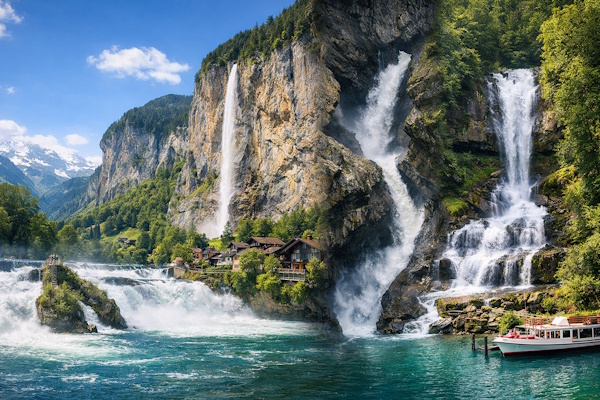
AI-generated image
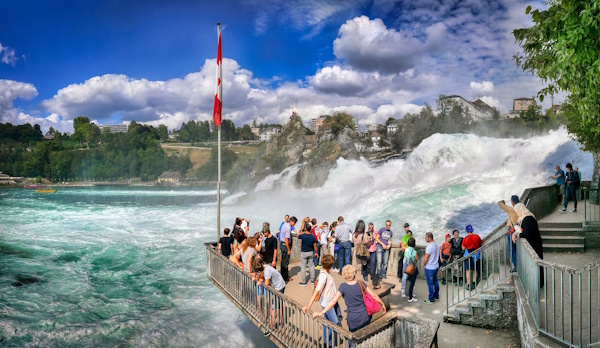
The Rhine Falls near Schaffhausen are the largest waterfalls in Europe by water volume. Unlike tall alpine waterfalls, the Rhine Falls are wide and powerful. The water crashes over a 150-meter-wide rock barrier, creating mist and a constant roar.
Location
Near Schaffhausen, close to the German border.
Highlights
- Boat trips to the central rock
- Viewing platforms very close to the water
- Easy access by train
- Good infrastructure and visitor center
Best Time
Late spring and early summer when snowmelt increases water flow.
2. Staubbach Falls – The Icon of Lauterbrunnen
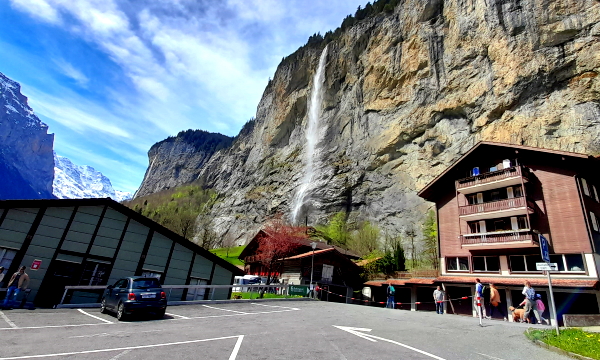
Staubbach Falls is one of Switzerland’s highest free-falling waterfalls. It drops almost 300 meters from a vertical cliff into the Lauterbrunnen Valley.
The waterfall is easily accessible from Lauterbrunnen village and is visible from far away. In summer, the falling water often turns into mist before reaching the ground.
Highlights
- Short walk from the village
- Small path behind the waterfall (seasonal)
- Iconic photography location
3. Trümmelbach Falls – Inside the Mountain
Trümmelbach Falls are unique because they flow inside a mountain. Meltwater from the Eiger, Mönch and Jungfrau glaciers crashes through narrow rock tunnels.
The waterfall system consists of ten cascades accessible by tunnels, paths and an elevator. It is one of the most unusual waterfall experiences in Europe.
Practical Information
- Located in Lauterbrunnen Valley
- Open roughly April to November
- Entry fee required
Combine with visits to Mürren or Wengen.
4. Giessbach Falls – Above Lake Brienz
Giessbach Falls cascade in multiple steps down a forested hillside into Lake Brienz. A historic hotel stands nearby, and a funicular connects the lake to the waterfall area.
Highlights
- Multiple cascades
- Boat access from Lake Brienz
- Scenic hiking paths
5. Reichenbach Falls – Sherlock Holmes Connection
Located near Meiringen in the Bernese Oberland, Reichenbach Falls are historically known from Arthur Conan Doyle’s Sherlock Holmes story.
- Accessible by funicular
- Impressive height
- Less crowded than Lauterbrunnen waterfalls
Best Region for Waterfalls: Bernese Oberland
The Bernese Oberland is the best region for waterfall lovers. Lauterbrunnen Valley alone has more than 70 waterfalls.
Combine waterfall visits with:
Best Time to Visit Swiss Waterfalls
May–June
Strongest water flow due to snowmelt.
July–September
Stable weather, good hiking conditions.
Winter
Some waterfalls freeze partially. Limited access in alpine valleys.
How Long Should You Plan?
- Rhine Falls: 1–2 hours
- Staubbach + Trümmelbach: Half day
- Full Lauterbrunnen exploration: 1–2 days
- Waterfall tour in Bernese Oberland: 2–3 days
Pros & Cons of Visiting Swiss Waterfalls
Pros
- Easy access to many waterfalls
- Safe infrastructure
- Spectacular alpine scenery
- Good public transport
Cons
- Can be crowded in summer
- Some entry fees
- Weather dependent
Is It Worth Visiting Swiss Waterfalls?
Yes, especially if you are already traveling in alpine regions. Swiss waterfalls are easy to access, well maintained and often combined with scenic villages, mountain railways and hiking routes.
If you are visiting Interlaken, waterfall excursions are among the easiest day trips.
FAQ – Swiss Waterfalls
What are the most famous waterfalls in Switzerland?
The most famous waterfalls in Switzerland include the Rhine Falls, Staubbach Falls, and Trümmelbach Falls. Each offers a different experience. Rhine Falls are known for sheer water power and width, Staubbach Falls for their height and elegance, and Trümmelbach Falls for their dramatic underground cascades inside a mountain.
Which waterfall is the biggest in Switzerland?
The Rhine Falls are the largest waterfall in Switzerland by water volume. They are about 150 meters wide and up to 23 meters high. While not the tallest, they carry enormous amounts of water, especially in late spring and early summer when snowmelt increases flow.
Which is the tallest waterfall in Switzerland?
Switzerland has several very high waterfalls. Staubbach Falls drop nearly 300 meters in a free fall. However, some remote alpine waterfalls are even taller but less accessible. Staubbach is the most famous tall waterfall that visitors can easily reach.
Where is the best region for waterfalls in Switzerland?
The Bernese Oberland is widely considered the best region. The Lauterbrunnen Valley alone has over 70 waterfalls. It is easily accessible from Interlaken and connects well with mountain destinations like Jungfraujoch and Schilthorn.
Are Swiss waterfalls free to visit?
Most waterfalls such as Staubbach Falls are free to visit. However, some attractions charge entry fees. Trümmelbach Falls require a ticket because of infrastructure, tunnels and safety systems. Viewing platforms at Rhine Falls may also require small fees depending on access points.
When is the best time to visit waterfalls in Switzerland?
The best time is May to early July. Snowmelt from the Alps creates strong water flow. During late summer, some waterfalls may have reduced volume. In winter, some waterfalls partially freeze and access can be limited.
Are waterfalls accessible in winter?
Accessibility depends on location. Rhine Falls remain accessible year-round. In alpine valleys like Lauterbrunnen, walking paths may be icy or partially closed. Always check local conditions before visiting in winter.
Can you swim at Swiss waterfalls?
Swimming directly near waterfalls is generally not recommended due to strong currents and cold glacial water. However, some nearby lakes such as Lake Brienz or Lake Thun offer safe swimming areas.
Are waterfalls suitable for children?
Yes, many major waterfalls are family-friendly. Rhine Falls have secure platforms and railings. Staubbach Falls are easy to reach with a short walk. Trümmelbach Falls may be loud and involve stairs, which can be challenging for very young children.
Do I need hiking experience to visit Swiss waterfalls?
No special hiking experience is required for the main waterfalls. They are accessible via maintained paths. However, if you plan to combine waterfall visits with alpine hiking, you should prepare accordingly and wear proper footwear.
How much time should I plan for waterfall visits?
Rhine Falls typically require 1–2 hours. Staubbach Falls can be visited in 30–60 minutes. Trümmelbach Falls usually take 1–2 hours. A full waterfall exploration day in Lauterbrunnen Valley can easily fill an entire day.
Are waterfalls crowded?
During peak summer season (July and August), popular waterfalls can be busy, especially those near major tourist hubs. Visiting early in the morning or late afternoon helps avoid larger tour groups.
Are there guided waterfall tours in Switzerland?
Yes, guided tours are available in regions like the Bernese Oberland and around Rhine Falls. Many tours combine waterfalls with scenic train rides, cable cars or lake cruises.
Are waterfalls included in the Swiss Travel Pass?
The Swiss Travel Pass covers most public transportation to waterfall regions. However, entry fees for attractions like Trümmelbach Falls are usually not included.
What should I wear when visiting waterfalls?
Wear comfortable walking shoes with good grip. Waterproof jackets are useful because mist from waterfalls can make viewing platforms wet. In alpine areas, temperatures may be cooler even in summer.
Is visiting waterfalls safe?
Yes, Swiss waterfalls are generally very safe due to well-maintained paths and railings. Visitors should still follow safety signs, avoid climbing barriers and be cautious on wet surfaces.
Which waterfall is best for photography?
Staubbach Falls are highly photogenic due to their height and valley setting. Rhine Falls offer dynamic wide-angle shots. Giessbach Falls near Lake Brienz are ideal for landscape photography combining forest, water and lake views.
Can I combine waterfalls with other attractions?
Yes. Waterfalls in the Bernese Oberland can be combined with visits to Grindelwald, Mürren or scenic mountain railways listed under Swiss cog railways. Rhine Falls can be combined with a visit to Zurich or northern Switzerland.
Do waterfalls operate year-round?
Waterfalls themselves flow year-round, but visitor infrastructure may have seasonal schedules. Always verify opening times for attractions with tunnels, elevators or boat services.
Are Swiss waterfalls worth visiting?
Yes. Swiss waterfalls offer accessible natural scenery combined with high-quality infrastructure. Whether you prefer powerful river cascades or elegant alpine drops, Switzerland provides a wide variety of waterfall experiences suitable for short visits or multi-day itineraries.