 Posted by
 The Swiss ibex, also known as the Alpine ibex (Capra ibex), is one of the most impressive wild animals in Switzerland. With its massive curved horns and ability to climb steep rock faces, the ibex has become a symbol of the Swiss Alps. For many visitors, spotting a Swiss ibex in the wild is a highlight of a hiking trip.
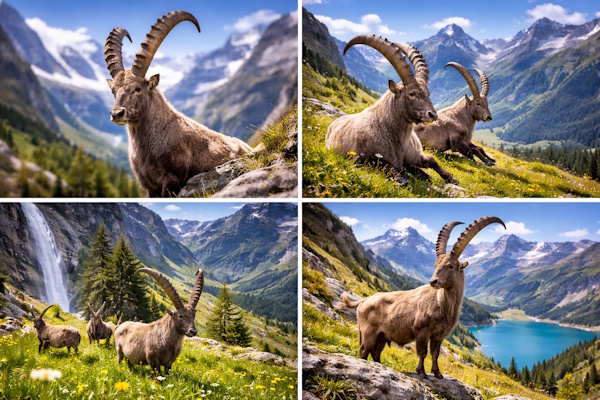
This complete guide explains where to see the Swiss ibex, the best time for sightings, how to identify males and females, safety tips, conservation history and practical hiking advice. Whether you are visiting the Bernese Oberland, Valais or Graubünden, this article helps you plan realistic wildlife encounters.
Swiss Alpine Wildlife Tours & Mountain Excursions
Join guided hikes and mountain tours where ibex sightings are possible in high alpine terrain.
Find Hotels Near Alpine Wildlife Areas
Stay close to national parks and mountain regions to increase your chances of seeing ibex.
What Is a Swiss Ibex?
The Swiss ibex is a wild mountain goat species native to the European Alps. It is known for its long, backward-curving horns, which can grow up to one meter in males. Ibex are highly adapted to life in steep, rocky terrain and can climb almost vertical slopes with remarkable balance.
- Scientific name: Capra ibex
- Weight: 65–120 kg (males), 35–50 kg (females)
- Horn length: Up to 100 cm (males)
- Lifespan: 15–20 years in the wild
Where to See Swiss Ibex in Switzerland
Ibex live in high alpine areas above the tree line, usually between 1,800 and 3,200 meters. They prefer rocky slopes, cliffs and open mountain pastures.
Best Regions for Ibex Sightings
- Bernese Oberland (see Bernese Oberland fauna)
- Valais region (around Zermatt)
- Graubünden (Swiss National Park)
- Above Grindelwald
- Mountain areas near Interlaken
High-altitude hiking areas described in Mountains of the Bernese Oberland are particularly suitable.
Best Time to See Swiss Ibex
- Season: June to September
- Best time of day: Early morning or late afternoon
- Winter: Ibex descend to lower elevations but are harder to access
Summer is the most reliable season because hiking trails are open and ibex graze in visible alpine meadows.
How to Identify Male and Female Ibex
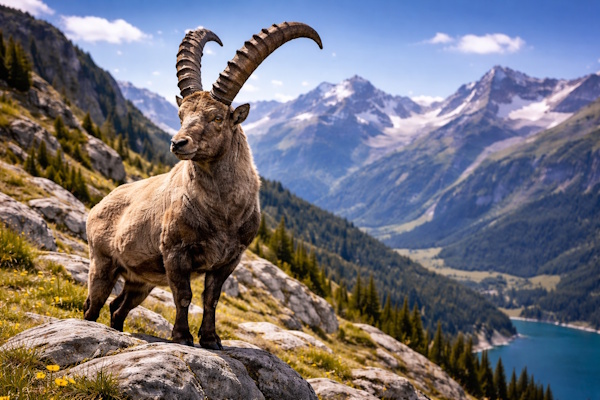
Males (Bucks)
- Very large curved horns
- Heavier body
- Often solitary or in small male groups
Females (Does)
- Shorter, thinner horns
- Smaller body size
- Usually in groups with young animals
Are Swiss Ibex Dangerous?
Ibex are generally shy and avoid humans. However, they are wild animals and should never be approached closely.
- Keep at least 50 meters distance
- Do not feed wildlife
- Do not block escape routes
Incidents are rare. Compared to other natural risks discussed in dangerous animals in Switzerland, ibex pose minimal danger if respected.
History of the Swiss Ibex
The Alpine ibex was once nearly extinct in Switzerland due to hunting in the 19th century. By the early 1800s, only a few individuals survived in Italy.
Through conservation efforts and reintroduction programs starting in the early 20th century, ibex populations recovered successfully. Today, thousands live across the Swiss Alps.
Hiking Tips for Ibex Spotting
- Choose trails above 2,000 meters
- Scan rocky slopes with binoculars
- Move quietly
- Avoid peak midday heat
- Check local wildlife information boards
For trail ideas see Hiking in the Bernese Oberland.
Photography Tips
- Use a telephoto lens
- Shoot in early morning light
- Focus on horn details
- Respect distance
Ibex vs Chamois – What’s the Difference?
- Ibex: Very large curved horns, heavier body
- Chamois: Smaller, black hooked horns, lighter build
Both species inhabit similar alpine areas.
Pros & Cons of Searching for Ibex
Pros
- Iconic alpine wildlife experience
- Great photography opportunities
- Free natural attraction
Cons
- Requires high-altitude hiking
- Sightings not guaranteed
- Weather-dependent
Is It Worth Trying to See Swiss Ibex?
Yes, if you are already hiking in alpine regions. Do not plan an entire trip solely around ibex spotting, but consider it a rewarding bonus during mountain excursions.
FAQ – Swiss Ibex (Alpine Ibex) in Switzerland
What is a Swiss ibex?
The Swiss ibex, also known as the Alpine ibex (Capra ibex), is a wild mountain goat species native to the European Alps. It is best known for its long, curved horns and its ability to climb steep rock faces with remarkable balance.
Where can I see Swiss ibex in Switzerland?
Swiss ibex live in high alpine regions above the tree line, usually between 1,800 and 3,200 meters. Good areas for sightings include the Bernese Oberland, Valais (around Zermatt), Graubünden and parts of central Switzerland. National parks and protected mountain regions offer the highest chances.
What is the best time to see ibex?
The best season is from June to September when hiking trails are open and ibex graze in alpine meadows. Early morning and late afternoon are the most reliable times of day for sightings.
Can I see ibex in winter?
Yes, ibex remain in the Alps year-round. In winter they often descend to slightly lower elevations. However, access is more difficult due to snow and closed hiking routes.
How large do Swiss ibex get?
Adult males (bucks) can weigh up to 120 kg and have horns reaching up to one meter in length. Females (does) are smaller and lighter, usually weighing between 35 and 50 kg.
What is the difference between male and female ibex?
Males have much larger, thicker and more curved horns. They are also heavier and often live alone or in small male groups. Females have shorter, thinner horns and typically stay in groups with young animals.
Are Swiss ibex dangerous?
Ibex are generally shy and avoid humans. They are not considered dangerous if respected. However, they are wild animals and should never be approached closely or fed. Keep a safe distance of at least 50 meters.
What should I do if I encounter an ibex on a trail?
Stay calm, keep your distance and allow the animal space to move away. Do not attempt to touch, feed or block its path. If the ibex is standing on a narrow trail, wait patiently until it moves.
How good are ibex at climbing?
Ibex are exceptional climbers. Their hooves have a hard outer edge and a soft inner pad, allowing them to grip steep rock surfaces. They can navigate near-vertical cliffs that seem inaccessible to humans.
Are ibex common in Switzerland?
Yes. After nearly becoming extinct in the 19th century, ibex populations were successfully reintroduced. Today, thousands live across the Swiss Alps.
Why did ibex almost disappear?
Ibex were heavily hunted in the 18th and 19th centuries for meat, horns and supposed medicinal properties. By the early 1800s, they survived only in a small area in Italy. Reintroduction programs helped restore populations in Switzerland.
How long do ibex live?
In the wild, ibex typically live between 15 and 20 years, depending on environmental conditions and predation.
What do Swiss ibex eat?
Ibex feed mainly on alpine grasses, herbs, shrubs and mosses. Their diet changes seasonally depending on vegetation availability.
Are ibex protected in Switzerland?
Yes. The Swiss ibex is protected and carefully managed. Hunting is regulated and controlled in specific regions under strict wildlife management rules.
What predators do ibex have?
Natural predators include wolves and lynx, although adult ibex are rarely attacked. Young animals are more vulnerable. Golden eagles may prey on very young ibex.
How can I increase my chances of seeing ibex?
Choose high-altitude hiking trails above 2,000 meters, start early in the morning, move quietly and bring binoculars. Visiting protected wildlife areas improves your chances significantly.
What is the difference between ibex and chamois?
Ibex are larger with long, thick curved horns. Chamois are smaller and have short, hooked black horns. Both species live in alpine regions but are distinct animals.
Can children safely observe ibex?
Yes, as long as children keep a respectful distance and remain calm. Wildlife observation should always be supervised and quiet.
Is it worth planning a trip specifically to see ibex?
Ibex sightings can be a memorable highlight, especially for wildlife enthusiasts and photographers. However, sightings are not guaranteed, so they are best combined with general alpine hiking activities.