 Posted by
 Switzerland is famous for its mountains, lakes and hiking trails — but it is also home to several native snake species. While encounters are relatively rare, hikers, campers and nature lovers should understand which snakes live in Switzerland, which species are venomous, and how to behave if they meet one. After a snake bite, always consult a doctor immediately.
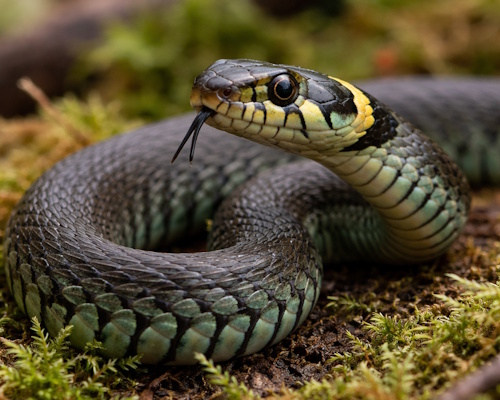
This comprehensive guide covers all snake species found in Switzerland, with a special focus on venomous snakes. It explains identification features, habitats, distribution, bite risks, safety rules and common myths. Whether you are hiking in alpine meadows, exploring rocky valleys or walking along lakeshores, this article provides the essential information.
Find the Best Hotels
Compare hotels, apartments and guesthouses. Flexible cancellation options available.
Are There Venomous Snakes in Switzerland?
Yes, Switzerland has two native venomous snake species:
- Asp Viper (Vipera aspis)
- European Adder (Vipera berus)
Both species are shy and avoid human contact. Bites are rare and usually occur when a snake is accidentally stepped on or handled. Fatalities are extremely rare thanks to modern medical treatment.
Venomous Snakes in Switzerland
Asp Viper (Vipera aspis)
- Length: 50–70 cm
- Color: Brown, grey or reddish with zigzag or irregular markings
- Head: Clearly triangular
- Habitat: Rocky slopes, vineyards, forest edges
- Regions: Southern Switzerland (Ticino), Valais, western areas
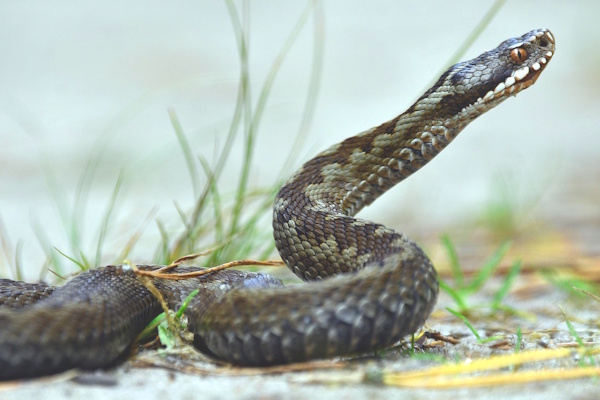
The venom affects circulation and the nervous system. Symptoms may include swelling, pain, nausea and dizziness. Severe reactions are uncommon but require medical care. After a snake bite, always consult a doctor immediately.
European Adder (Vipera berus)
- Length: 50–80 cm
- Color: Grey, brown or black with dark zigzag pattern
- Habitat: Meadows, forest clearings, alpine grasslands
- Elevation: Up to about 2,500 meters
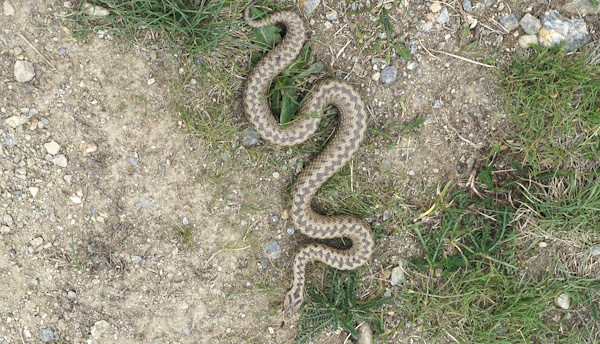
The European Adder is widespread in cooler regions and at higher elevations. Its bite is rarely life-threatening for healthy adults. After a snake bite, always seek medical attention immediately.
Top Tours & Activities
Discover the best guided tours, tickets and experiences. Free cancellation available on most activities.
All Non-Venomous Snakes in Switzerland
Switzerland has six non-venomous species. All are harmless to humans.
Grass Snake (Natrix natrix)
- Up to 1 meter long
- Olive or grey with yellow collar behind the head
- Found near lakes, rivers and wetlands
Barred Grass Snake (Natrix helvetica)
- Similar to Grass Snake
- More common in western Switzerland
- Strong swimmer
Dice Snake (Natrix tessellata)
- Aquatic species
- Found near Lake Geneva and southern regions
- Feeds mainly on fish
Smooth Snake (Coronella austriaca)
- Often confused with vipers
- Slender head (not triangular)
- Prefers dry slopes and stone walls
Aesculapian Snake (Zamenis longissimus)
- One of Europe’s longest snakes (up to 1.5 m)
- Rare in Switzerland
- Found mainly in southern regions
Western Whip Snake (Hierophis viridiflavus)
- Fast-moving species
- Greenish-black coloration
- Found mainly in Ticino
Where Are Snakes Most Common?
Snakes prefer:
- Sunny rocky slopes
- Dry stone walls
- Forest edges
- Alpine meadows
- Lakesides and riverbanks
They are less common in dense urban areas and high alpine zones above the tree line.
When Are Snakes Active?
- Often April to September
- Warm active sunny days
- More morning and late afternoon
Snakes hibernate during winter.
What To Do If You See a Snake
- Stay calm.
- Keep a safe distance (2–3 meters).
- Do not attempt to touch or kill it.
- Allow the snake to retreat.
All snake species in Switzerland are protected by law.
What To Do If Bitten
- Call emergency number 144.
- Stay calm and minimize movement.
- Immobilize the affected limb.
- Remove tight clothing or rings.
- Do NOT cut the wound or suck venom.
Swiss hospitals are fully equipped to treat snake bites.
How Dangerous Are Snakes in Switzerland?
Snake bites are rare. Most cases involve mild to moderate symptoms. Hiking accidents, falling rocks and weather conditions pose significantly higher risks than snakes.
Pros & Cons of Snake Presence
Pros
- Important ecological role
- Control rodent populations
- Indicator of healthy habitats
Cons
- Rare venomous bites
- Fear among hikers
Common Myths
- Myth: Snakes chase humans. Reality: They avoid people.
- Myth: All snakes are dangerous. Reality: Only two species are venomous.
- Myth: Snake bites are usually fatal. Reality: Fatalities are extremely rare.
Is Hiking in Switzerland Safe?
Yes. Switzerland is extremely safe for outdoor activities. Basic awareness and sturdy footwear greatly reduce the already minimal risk.
FAQ – Snakes in Switzerland
How many snake species live in Switzerland?
Switzerland has eight native snake species. Two are venomous (Asp Viper and European Adder), and six are non-venomous and harmless to humans.
Are there dangerous snakes in Switzerland?
There are two venomous species, but they are shy and avoid human contact. Snake bites are rare, and fatalities are extremely uncommon with modern medical treatment.
What should I do after a snake bite?
After a snake bite, always seek medical attention immediately. In Switzerland, call emergency number 144. Stay calm and limit movement until help arrives.
Where are venomous snakes found in Switzerland?
The Asp Viper is mainly found in southern and western Switzerland (e.g., Ticino and Valais). The European Adder occurs in cooler regions and alpine areas across central and eastern Switzerland.
Are Swiss snakes aggressive?
No. Swiss snakes are not aggressive and usually flee when disturbed. Most bites happen when someone accidentally steps on a snake.
Are snakes common while hiking?
Encounters are possible during warm months, especially on sunny rocky slopes or forest edges, but they are not common. The overall risk is low.
When are snakes most active?
Snakes are most active from April to September, particularly on warm, sunny days. They are often seen in the morning or late afternoon.
Are snakes protected in Switzerland?
Yes. All native snake species are protected by law. Killing or disturbing them is illegal.
Can children and pets be at risk?
The risk is low, but children and pets should avoid touching snakes. In case of a suspected bite, seek medical or veterinary help immediately.
Is hiking in Switzerland safe despite snakes?
Yes. Switzerland is very safe for hiking. Snake bites are rare and far less common than typical hiking-related injuries.