 Posted by
 Switzerland is home to more than 1,500 lakes, ranging from large deep-blue bodies of water in valleys to small turquoise alpine lakes surrounded by glaciers. Many visitors focus on mountains, but some of the most spectacular landscapes in the country are found around its lakes.
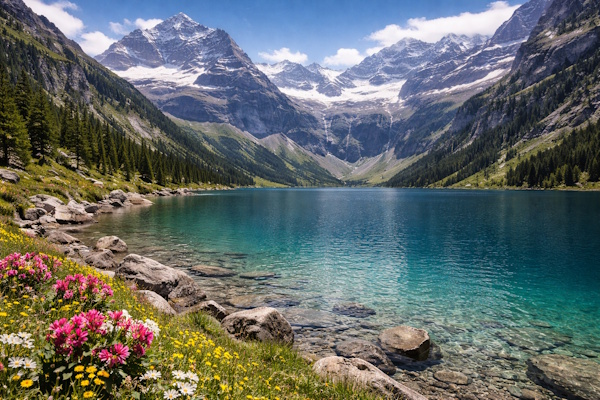
This comprehensive guide presents the most beautiful lakes in Switzerland, including famous highlights and lesser-known alpine gems. You will find practical travel tips, best viewpoints, swimming advice, seasonal comparisons and suggestions on how to combine lake visits with hiking and sightseeing.
Lake Tours & Scenic Experiences in Switzerland
Explore boat cruises, mountain excursions and scenic tours near Switzerland’s most beautiful lakes.
Find Hotels Near Swiss Lakes
Stay close to scenic lake regions for easy access to swimming areas, hiking trails and panoramic viewpoints.
1. Oeschinen Lake (Oeschinensee)
Located above Kandersteg in the Bernese Oberland, Oeschinen Lake is one of the most photographed alpine lakes in Switzerland. Its turquoise glacial water and steep rock walls create a dramatic setting.
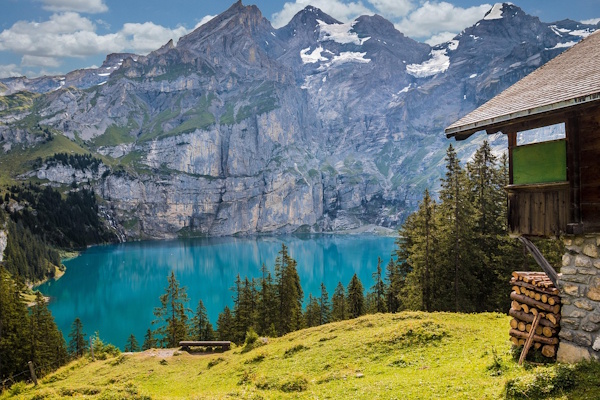
- Altitude: 1,578 meters
- Best for: Hiking, photography, summer visits
- Access: Cable car + short walk
This lake is part of the UNESCO Swiss Alps Jungfrau-Aletsch region.
2. Lake Brienz
Lake Brienz is known for its intense turquoise color caused by glacial sediments. It lies between Interlaken and Brienz and is surrounded by steep mountains.
- Best for: Boat cruises, kayaking
- Nearby: Giessbach Falls
- Scenery: Steep alpine slopes
3. Lake Thun
Lake Thun offers a different character: deep blue water, castles along the shoreline and easy access from Interlaken.
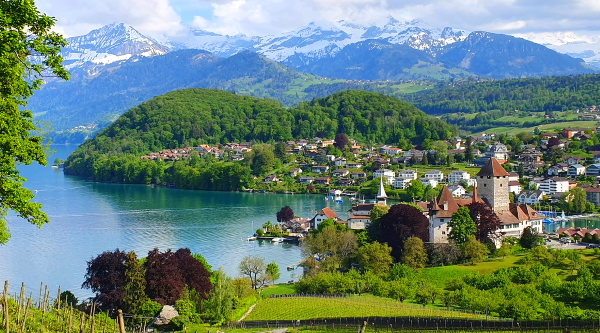
- Best for: Scenic cruises, swimming, historic villages
- Less turquoise, more classic blue
4. Bachalpsee
Bachalpsee is a smaller alpine lake above Grindelwald, famous for reflections of snow-capped peaks. It is reached via hiking trails near Grindelwald.
- Best for: Photography
- Altitude: Over 2,200 meters
- Access: Moderate hike
5. Lake Geneva (Lac Léman)
Lake Geneva is one of Europe’s largest lakes and borders both Switzerland and France. The city of Geneva lies at its western end.
- Best for: Urban lakeside experience
- Activities: Sailing, lakeside promenades
- Scenery: Vineyards and mountain views
6. Lake Lucerne (Vierwaldstättersee)
Located near Lucerne, Lake Lucerne is surrounded by steep mountains and historic villages.
- Best for: Combined city and nature trip
- Activities: Steamboat cruises, mountain excursions
7. Caumasee
Caumasee in Graubünden is a small, intensely turquoise lake often compared to a tropical destination.
- Best for: Summer swimming
- Atmosphere: Relaxed and scenic
8. Blausee
Blausee is a small, crystal-clear lake in the Bernese Oberland known for its deep blue water and forest setting.
- Best for: Short visit, photography
- Access: Easy
Seasonal Differences
Spring
High water levels due to snowmelt. Some alpine lakes may still be partially frozen.
Summer
Best time for swimming, hiking and photography. Peak tourist season.
Autumn
Fewer crowds and beautiful reflections.
Winter
Some alpine lakes are frozen and accessible only with winter hiking equipment.
Which Lake Is the Most Beautiful?
The answer depends on preference:
- For dramatic alpine scenery: Oeschinen Lake
- For intense turquoise water: Lake Brienz
- For city + lake combination: Lake Lucerne or Lake Geneva
- For hiking reflections: Bachalpsee
Pros & Cons of Visiting Swiss Lakes
Pros
- Diverse scenery
- Accessible by train
- Family-friendly
- Great for photography
Cons
- Crowded in summer
- Cold water in alpine lakes
- Weather dependent
Is It Worth Planning a Trip Around Swiss Lakes?
Yes. Swiss lakes provide some of the country’s most accessible and photogenic landscapes. They combine hiking, relaxation and scenic beauty without requiring extreme mountaineering.
FAQ – Most Beautiful Lakes in Switzerland
How many lakes are there in Switzerland?
Switzerland has more than 1,500 lakes of various sizes. They range from large international lakes like Lake Geneva to small high-alpine glacial lakes above 2,000 meters.
Which lake is considered the most beautiful in Switzerland?
This depends on personal preference. Oeschinen Lake is often considered the most dramatic alpine lake, Lake Brienz is famous for its turquoise color, and Lake Lucerne combines mountain scenery with historic towns.
Which Swiss lake has the clearest water?
High alpine lakes such as Oeschinen Lake and Bachalpsee are known for their clarity. Smaller lakes like Blausee are particularly famous for crystal-clear water.
Why are some Swiss lakes turquoise?
The turquoise color comes from fine rock particles called “glacial flour” suspended in the water. These particles reflect sunlight in a way that produces the bright blue-green appearance.
Which Swiss lakes are best for swimming?
Lower-elevation lakes such as Lake Geneva, Lake Thun and Lake Zurich are popular for swimming in summer. Alpine lakes are usually much colder.
Are alpine lakes very cold?
Yes. Alpine lakes fed by glaciers remain cold even during summer. Water temperatures often stay below 15°C.
When is the best time to visit Swiss lakes?
Summer (June to September) offers the best weather for swimming and hiking. Late spring provides strong water flow from snowmelt, while autumn offers fewer crowds and calm reflections.
Can I visit Swiss lakes in winter?
Yes. Large lakes remain accessible year-round. Some high alpine lakes may freeze or become harder to reach due to snow.
Which lakes are easiest to reach without hiking?
Lake Geneva, Lake Lucerne, Lake Zurich and Lake Thun are easily accessible by train or car. Alpine lakes such as Bachalpsee require hiking.
Are there boat cruises on Swiss lakes?
Yes. Many large lakes, including Lake Geneva, Lake Lucerne, Lake Thun and Lake Brienz, offer scenic boat cruises.
Which lake is best for photography?
Oeschinen Lake and Bachalpsee are especially popular for mountain reflections. Lake Brienz is famous for its intense turquoise color.
Are Swiss lakes safe for families?
Yes. Many lakes have designated swimming areas, beaches and safe walking paths. However, supervision is necessary near steep alpine shores.
Which lake is best for a day trip from Zurich?
Lake Zurich is the closest option. Rhine Falls and Lake Lucerne are also popular day trips from Zurich.
Can I combine lakes with hiking?
Yes. Many alpine lakes are reached via hiking trails, especially in the Bernese Oberland and Graubünden regions.
Are there hidden lakes in Switzerland?
Yes. Smaller alpine lakes such as Caumasee and Bachalpsee are less crowded than large city lakes but still offer impressive scenery.
Is it expensive to visit Swiss lakes?
Access to lakes is usually free, but transportation, parking and boat cruises may involve costs.
Which Swiss lake is the largest?
Lake Geneva (Lac Léman) is the largest lake in Switzerland by surface area.
Which Swiss lake is the deepest?
Lake Geneva and Lake Lucerne are among the deepest lakes in Switzerland.
Are Swiss lakes suitable for kayaking?
Yes. Lake Brienz, Lake Thun and Lake Lucerne are popular for kayaking and paddleboarding during summer.
Is it worth planning a trip around Swiss lakes?
Yes. Swiss lakes offer accessible natural beauty, scenic boat rides and diverse landscapes, making them a valuable part of any Switzerland itinerary.